My Ontario Turkey Setup 2026
There’s nothing quite like a spring morning in Ontario when that first gobble echoes through the bush. After months of winter, that sound can send goosebumps up your arms.
Over the years I’ve tried different setups, made plenty of mistakes, and learned what actually works for me in the turkey woods. This isn’t about having the most expensive gear or running the flashiest decoys. It’s about building a setup that gives you confidence when that bird finally steps into range.
This is what I’m running for the 2026 season — and why.
A Look At The Shotgun
I’m running a 12 gauge Beretta A400 xtreme plus. It doubles as my waterfowl shotgun as well. I only switched to it recently. Prior to last season I was shooting a Winchester SXP Longbeard. The reason for switching is I wanted to have an easy follow up shot on a bird in case I’m looking down my barrel a little cross eyed that day and miss my first shot.
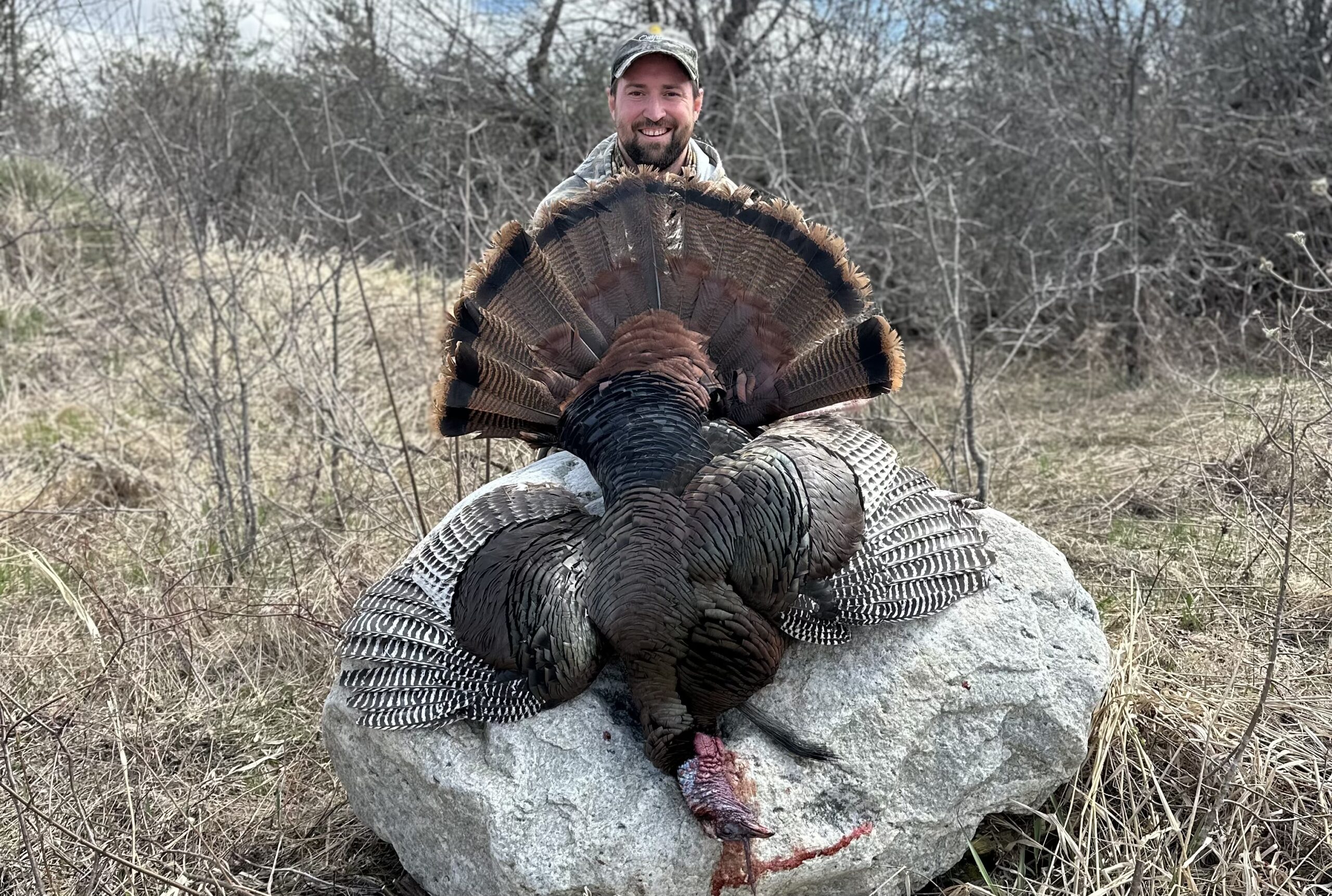
I love the reliable gas system and the kick-off butt stock technology to handle the recoil for staying on target easier. I realized my favourite shotgun was sitting in the safe most of the year outside of waterfowl season, so I decided to sell my SXP and go with my Beretta and I haven’t looked back since! It certainly didn’t fail me in the turkey woods, bagging two nice gobblers.
With most things I hunt, I’ve always started with a budget setup and slowly upgraded over time. You don’t need a $2500.00 gun to get started. The Winchester SXP sits in a budget friendly starter shotgun category and worked great for me for years. If you are set on a semi-auto a great start would be the Winchester SX4 (or finding a used SX3). A good step up from that is the Franchi Affinity, both of which my good friend shoots and swears by. He uses his SX4 as his dedicated turkey boom-stick and his Franchi for waterfowl.
At the end of the day, any of these setups will kill a turkey if you do your part. Don’t overthink it — get a reliable shotgun and get in the woods. When those morning gobbles hit you won’t care what shotgun is in your hand!
What Choke and Load Used and Why
Now when it comes to choke tubes, I am no expert. I actually plan to pick one up this season and test it properly. On my SXP Longbeard I used the turkey choke that came with the gun and last season I just used my full choke that came with my Beretta. I have several friends that use a regular full choke. Inside 40 yards, a properly patterned full choke will get the job done all day long. Once the snow melts, I plan to pattern a few choke options and share the results in a future article.
The absolute key to good shots is the shells you choose. And this is relative to the shotgun of choice. Every shotgun likes certain shells and the only way to figure it out is to “pattern” your shotgun with different shells. If you have a new shotgun I’d recommend saving yourself a trip to the store and buying at least two different rounds to take home. I’ve had certain loads not even hit a 2’x2’ target at 25 yards out of one gun and they shoot perfectly fine out of the next. What works for my shotguns are the Winchester Long Beard XR 3” 1 ⅞ oz. #6. And to make it even more odd, my gun doesn’t like shooting the exact same ammo in say #4 or #5 shot size. So it’s really key if you want consistent results in the field to get out there and figure out what shoots the best out of your gun specifically. My friend with the SX4 likes the Federal Premium 3rd degree TSS. These are very interesting as they combine a mix of shot sizes 5, 6 and 7.
I cannot stress enough to make sure you pattern your shotgun before getting out for the season, there is nothing worse than finally winning the argument with that stubborn tom and missing because you didn’t prepare.
Decoys
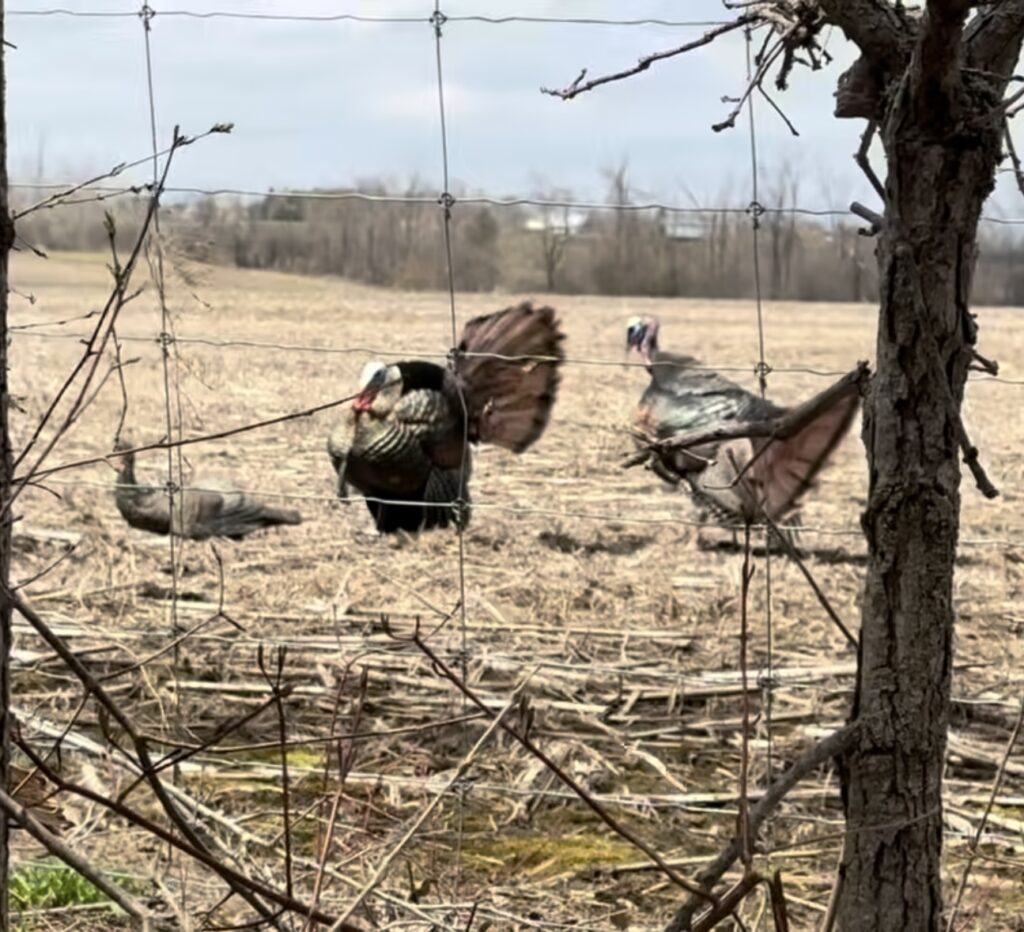
We’d been watching this tom for weeks. We tried to set up on him more than once, and every time he just wouldn’t play ball. After a week of playing cat and mouse, we slipped along the bush line and crawled up to a knoll in the field. I lifted the decoy just enough for him to see it, then stuck it into the ground. We barely squeezed under a page wire fence, got comfortable, and waited. No calling.
Within seconds, he crested the hill and came sprinting straight into the spread—beating up the strutter before I had to put an end to it. That moment alone was enough to remind me how powerful the right decoy setup can be when the timing is right.
Premium vs. Budget
Decoys! Now this topic can spark some debate. Of course budget is a huge factor and some guys will tell you they kill turkeys with 30 year old foam turkey decoys, which certainly can be done. In my opinion you can’t beat Dave Smith decoys or Avian-X decoys. The realism is next level. And if you’re still learning how to call or set up properly, that extra realism can help make up for it.
Calling vs. Decoy Realism-What Matters More?
I do agree that setup and good calling (not just sound but knowing when to call) would be more important than buying a whole flock of Avian-X decoys. And if you can master your calling and placing those decoys realistically you can easily get away with some more budget friendly options. I personally started with an Avian-X feeding hen which can be used in the majority of setups and isn’t crazy expensive to get you started.
Run and Gun vs. Ambush
It really depends on the way you want to hunt turkeys too. Do you want to sit back and let them come to you or do you want to get after them with some spot and stalk techniques. If you go that route you can’t go wrong with the Mojo Scoot-N-Shoot decoy which can be used as a normal decoy in setup or a run and gun style, in your face, reap! (Very fun) For anyone that doesn’t know what reaping is, it’s when you crawl behind the decoy, close the distance, and pop up when you are in range. A lot of times as soon as the bird sees you it will run right to you sometimes getting close enough you can feel the gobble through the ground.
Calling
Early Morning
Let’s start with this: this assumes you’ve roosted birds the night before, by either watching them and knowing exactly what trees they flew into or letting out a crow or owl call into the bush after dark and listening for gobbles. This is called a shock gobble. I like owl calls at night because it’s more natural, and crow calls for locating birds in the morning or during the day. I always try to set up as close as possible without them seeing you setup of course. If you have time to scout, watch which direction they naturally head each morning. It makes it a lot easier to lure a gobbler in if he already wants to go your direction. If you can get a setup like this, minimal calling is all that’s required. Call once or twice while he’s still on the roost so he knows where you are…then shut up.
Let curiosity get the better of him.
Late Morning and Midday
I typically try to set up for a reap if I can visually see them in a field. I’m a big run and gun guy at this time of day. But on good properties, you start to learn where birds like to hang out even when they’re not visible in the field. Sneak into that area and call softly. Normally they are not far. This can be a difficult sit. Patience can wear thin, but stick it out, good things can happen fast! And that lonely gobbler might be just sneaking into your sweet talk.
Evening Hunts
Typically this is where I try to ambush them on the most likely route to their roost. Don’t set up too close to the roost. They usually won’t be there until after legal light anyway.
Get out there whenever you can. You can call in a gobbler anytime of day. But nothing quite beats the thunderous gobbles on a crisp, quiet morning.
Clothing and Concealment
Turkey’s don’t miss much—and they definitely won’t miss you if you’re not hidden well.
The Underrated Tool
One thing I never go without on a turkey hunt is a pair of hand held shears. They’re perfect for trimming branches in your shooting lane or clipping a few limbs to break up your outline. They help you do this all very quietly. They don’t leave my turkey vest.
Staying Comfortable
Another item that I would say helps you stay concealed is a Primos Wingman hunting chair, keeps a low profile while allowing you to stay still while that gobbler is struttin in.
I don’t stress too much about perfect camo patterns. I worry more about how exposed I am. A tree line is ideal, especially if you can tuck yourself back into it. There’s nothing wrong with a good ol’ ground blind if you want maximum concealment and the ability to move a bit.
Throw on a comfortable face mask and you’re ready to play hide and seek with one of the sharpest birds in the woods.
Hard Lessons
Get Comfortable Before You Shoot
On my very first turkey hunt, I learned a lesson that cost me my first bird. We were tucked behind a brushed in plywood board acting as our blind. When that gobbler stepped into range, my heart was pounding and I couldn’t get into a comfortable shooting position. I rushed it and pulled the trigger anyway — and missed.
What I learned is this: once a bird is in range, you usually have more time than you think. Get into a solid shooting position. Move with purpose. Don’t rush the shot just because your adrenaline is through the roof.
Hope Is Not a Strategy
I used to just pick a spot in the woods and hope I could call a turkey in. That doesn’t work consistently.
Scouting and building a plan the night — or even week — before is what creates success. If you’re hunting new ground, talk to someone who knows the area. Knowing where the birds want to be is half the battle.
Setup Beats Calling
I’ve never really struggled with calling too much, mostly because early on I wasn’t very good at it. I focused more on scouting and setting up ambush-style hunts.
Over time I’ve gotten more confident calling, but the biggest lesson hasn’t changed — if you’re set up where a bird already wants to go, you don’t have to be a world-class caller.
Don’t Move Too Soon
We’ve moved too early more times than I’d like to admit. And it’s heartbreaking.
If you think he’s coming, he probably is. Sit tight. Give it more time than feels comfortable.
You Can’t Force a Gobbler
Beginners often overlook scouting and positioning. Sometimes you can’t make a gobbler do something he doesn’t want to do.
The Goal is to make it feel natural for him. When your setup fits his routine, your odds go way up.
What I’d Tell a New Ontario Turkey Hunter
If you’re just getting into turkey hunting in Ontario, don’t overcomplicate it.
You don’t need the most expensive shotgun or trailer full of decoys. You need patience, good scouting, and a willingness to sit still longer than feels comfortable.
Learn the properties you hunt. Figure out where birds want to be — not where you want them to be. Set up where they already feel comfortable moving.
Call less than you think you should. Move less than you want to. And when that gobbler finally commits, take a breath and trust your setup.
Most importantly, enjoy it. There’s nothing like hearing that first gobble crack through the quiet spring morning. That’s what keeps you coming back.